



Applying SOLID Principles in Flutter Applications
Introduction
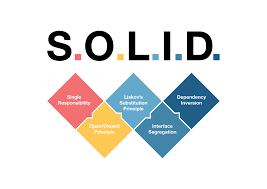
SOLID is an acronym representing five design principles intended to make software designs more understandable, flexible, and maintainable. In Flutter development, adhering to SOLID principles can significantly improve the quality and scalability of your applications. This article will guide you through the SOLID principles and demonstrate how to apply them in a Flutter application, complete with images and graphs for better understanding.
1. Single Responsibility Principle (SRP)
Description
The Single Responsibility Principle states that a class should have only one reason to change, meaning it should have only one responsibility or job.
Application in Flutter
In Flutter, this can be seen in how you structure your widgets and services. For example, separate your UI logic from business logic by using a state management solution like Provider or Riverpod.
Example
Before SRP:
class UserProfileScreen extends StatelessWidget {
  @override
  Widget build(BuildContext context) {
    // UI code
    // Business logic code
    return Scaffold(
      // Widget tree
    );
  }
}
After SRP:
- UserProfileScreen.dart: Responsible only for UI.
- UserProfileService.dart: Responsible for fetching user data.
UserProfileScreen.dart
class UserProfileScreen extends StatelessWidget {
  final UserProfileService service;

  UserProfileScreen(this.service);

  @override
  Widget build(BuildContext context) {
    return Scaffold(
      body: FutureBuilder<User>(
        future: service.getUserProfile(),
        builder: (context, snapshot) {
          // UI code
        },
      ),
    );
  }
}
UserProfileService.dart
class UserProfileService {
  Future<User> getUserProfile() {
    // Fetch user profile
  }
}
2. Open/Closed Principle (OCP)
Description
The Open/Closed Principle indicates that software entities should be open for extension but closed for modification. This means you should be able to add new features or functionalities without altering existing code.
Application in Flutter
You can achieve this by using abstract classes and inheritance. For example, if you have different types of widgets or services, create a base class or interface that can be extended.
Example
Before OCP:
class NotificationService {
  void sendNotification(String message) {
    // Send notification
  }
}
After OCP:
- NotificationService.dart: Base class
- EmailNotificationService.dart: Extends the base class
NotificationService.dart
abstract class NotificationService {
  void sendNotification(String message);
}
EmailNotificationService.dart
class EmailNotificationService implements NotificationService {
  @override
  void sendNotification(String message) {
    // Send email
  }
}
3. Liskov Substitution Principle (LSP)
Description
The Liskov Substitution Principle states that objects of a superclass should be replaceable with objects of a subclass without affecting the correctness of the program.
Application in Flutter
Ensure that subclasses or implementations maintain the expected behavior of the base class. For instance, if you create a custom widget, it should adhere to the same contract as the base widget.
Example
Before LSP:
class Bird {
  void fly() {}
}

class Penguin extends Bird {
  @override
  void fly() {
    throw Exception("Penguins can't fly!");
  }
}
After LSP:
- Bird.dart: Base class with only flyable behavior.
- NonFlyingBird.dart: Implements non-flying behavior.
Bird.dart
abstract class Bird {
  void move();
}
Penguin.dart
class Penguin implements Bird {
  @override
  void move() {
    // Penguin waddles
  }
}
4. Interface Segregation Principle (ISP)
Description
The Interface Segregation Principle suggests that clients should not be forced to depend on interfaces they do not use. Essentially, you should have specific interfaces rather than a general one.
Application in Flutter
Create multiple, smaller interfaces or classes rather than one large, monolithic one. This is particularly useful in services or data models.
Example
Before ISP:
class UserService {
  void getUser() {}
  void updateUser() {}
  void deleteUser() {}
}
After ISP:
- UserReadService.dart: For read operations
- UserWriteService.dart: For write operations
UserReadService.dart
abstract class UserReadService {
  void getUser();
}
UserWriteService.dart
abstract class UserWriteService {
  void updateUser();
  void deleteUser();
}
5. Dependency Inversion Principle (DIP)
Description
The Dependency Inversion Principle states that high-level modules should not depend on low-level modules. Both should depend on abstractions. Additionally, abstractions should not depend on details, but details should depend on abstractions.
Application in Flutter
Use dependency injection to provide dependencies rather than hardcoding them. This can be achieved through packages like GetIt or Provider.
Example
Before DIP:
class UserProfile {
  final ApiClient apiClient;

  UserProfile(this.apiClient);
}
After DIP:
- UserProfile.dart: Depends on an abstract service.
- ApiClient.dart: Implements the abstract service.
UserProfile.dart
abstract class ApiService {
  void fetchUser();
}

class UserProfile {
  final ApiService apiService;

  UserProfile(this.apiService);
}
ApiClient.dart
class ApiClient implements ApiService {
  @override
  void fetchUser() {
    // Implementation
  }
}
Conclusion
By applying the SOLID principles, you can build Flutter applications that are more modular, maintainable, and adaptable to change. Leveraging these principles helps you manage complexity and ensures your codebase remains robust as your application grows.
Innovative Mobile Solutions
Transform Ideas into Mobile Apps
Mobile Apps Tailored for Success
Seamless Mobile Experiences
Expert Mobile App Development