



Applying SOLID Principles in an Android Kotlin Application
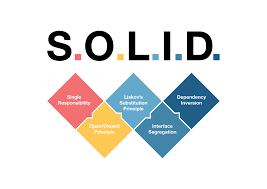
SOLID principles are a set of guidelines designed to make software designs more understandable, flexible, and maintainable. Applying these principles can greatly enhance the quality of your Android applications. In this article, we will explore how to use SOLID principles in an Android Kotlin application with practical examples.
1. Single Responsibility Principle (SRP)
Principle: A class should have only one reason to change, meaning it should have only one job or responsibility.
Example: Imagine a UserManager class that handles both user data management and user interface logic. This violates SRP. Instead, we should separate these concerns.
// Before: Violates SRP
class UserManager {
    fun getUserData(userId: String): User {
        // Code to fetch user data
    }

    fun showUserProfile(user: User) {
        // Code to display user profile
    }
}

// After: Follows SRP
class UserRepository {
    fun getUserData(userId: String): User {
        // Code to fetch user data
    }
}

class UserProfilePresenter {
    fun showUserProfile(user: User) {
        // Code to display user profile
    }
}
2. Open/Closed Principle (OCP)
Principle: Software entities should be open for extension but closed for modification.
Example: Consider a class that calculates different types of discounts. Instead of modifying the class for each new discount type, use polymorphism.
// Before: Violates OCP
class DiscountCalculator {
    fun calculateDiscount(type: String, amount: Double): Double {
        return when (type) {
            "SEASONAL" -> amount * 0.1
            "BLACK_FRIDAY" -> amount * 0.2
            else -> 0.0
        }
    }
}

// After: Follows OCP
interface DiscountStrategy {
    fun calculate(amount: Double): Double
}

class SeasonalDiscount : DiscountStrategy {
    override fun calculate(amount: Double): Double {
        return amount * 0.1
    }
}

class BlackFridayDiscount : DiscountStrategy {
    override fun calculate(amount: Double): Double {
        return amount * 0.2
    }
}

class DiscountCalculator(private val strategy: DiscountStrategy) {
    fun calculateDiscount(amount: Double): Double {
        return strategy.calculate(amount)
    }
}
3. Liskov Substitution Principle (LSP)
Principle: Objects of a superclass should be replaceable with objects of a subclass without affecting the correctness of the program.
Example: Suppose you have a Shape class and its subclasses. Ensure that the subclasses adhere to the behavior expected by the superclass.
// Before: Violates LSP
open class Shape {
    open fun calculateArea(): Double {
        return 0.0
    }
}

class Circle(val radius: Double) : Shape() {
    override fun calculateArea(): Double {
        return Math.PI * radius * radius
    }
}

class Square(val side: Double) : Shape() {
    override fun calculateArea(): Double {
        return side * side
    }
}

// After: Follows LSP
open class Shape {
    open fun calculateArea(): Double {
        return 0.0
    }
}

class Circle(val radius: Double) : Shape() {
    override fun calculateArea(): Double {
        return Math.PI * radius * radius
    }
}

class Square(val side: Double) : Shape() {
    override fun calculateArea(): Double {
        return side * side
    }
}

fun printArea(shape: Shape) {
    println("Area: ${shape.calculateArea()}")
}
4. Interface Segregation Principle (ISP)
Principle: Clients should not be forced to depend on interfaces they do not use.
Example: Suppose you have a Worker interface that includes several methods not needed by all implementing classes.
// Before: Violates ISP
interface Worker {
    fun work()
    fun eat()
}

class Developer : Worker {
    override fun work() {
        // Developer work
    }

    override fun eat() {
        // Developer eat
    }
}

class Manager : Worker {
    override fun work() {
        // Manager work
    }

    override fun eat() {
        // Manager eat
    }
}

// After: Follows ISP
interface Workable {
    fun work()
}

interface Eatable {
    fun eat()
}

class Developer : Workable, Eatable {
    override fun work() {
        // Developer work
    }

    override fun eat() {
        // Developer eat
    }
}

class Manager : Workable {
    override fun work() {
        // Manager work
    }
}
5. Dependency Inversion Principle (DIP)
Principle: High-level modules should not depend on low-level modules. Both should depend on abstractions. Abstractions should not depend on details. Details should depend on abstractions.
Example: Consider a UserService class that directly depends on a UserRepository. Use dependency injection to invert this dependency.
// Before: Violates DIP
class UserRepository {
    fun getUserData(userId: String): User {
        // Fetch user data
    }
}

class UserService {
    private val userRepository = UserRepository()

    fun getUser(userId: String): User {
        return userRepository.getUserData(userId)
    }
}

// After: Follows DIP
interface UserRepository {
    fun getUserData(userId: String): User
}

class UserService(private val userRepository: UserRepository) {
    fun getUser(userId: String): User {
        return userRepository.getUserData(userId)
    }
}

// Dependency Injection (e.g., using Dagger or Hilt) can be used to provide the implementation of UserRepository
Conclusion
By adhering to SOLID principles, you can build Android applications that are easier to maintain, extend, and understand. Each principle addresses a specific aspect of software design, helping you to create well-structured and reliable code. Start by applying these principles to small parts of your codebase and gradually refactor more significant components as needed.
Innovative Mobile Solutions
Transform Ideas into Mobile Apps
Mobile Apps Tailored for Success
Seamless Mobile Experiences
Expert Mobile App Development